
Upwards-Only Rent Reviews are going — But will the Government actually achieve what it set out to do?
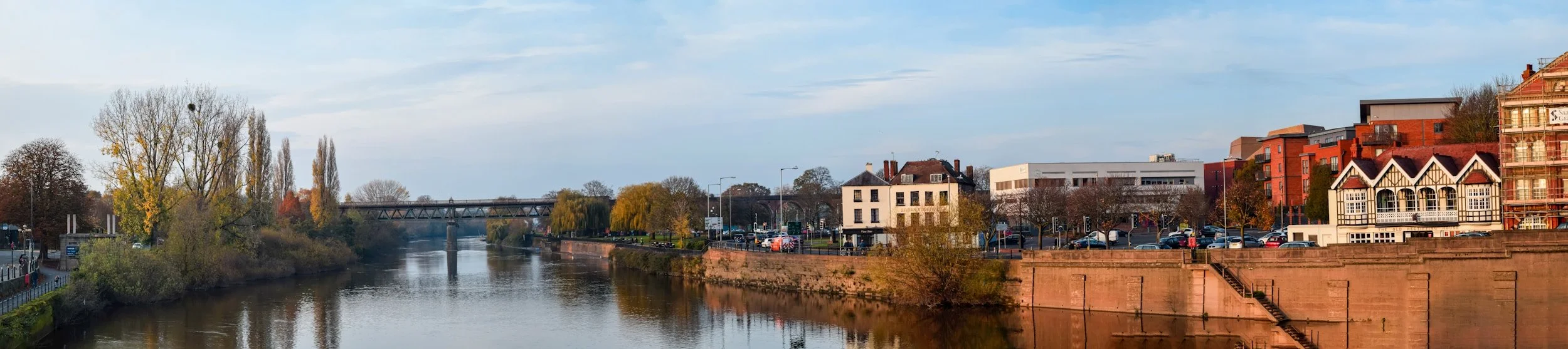
A perspective on the implications for the Worcestershire commercial property market.
The ban on upwards-only rent reviews (UORR) has been billed as a landmark moment for commercial tenants, and in some respects, it is, but here in Worcestershire, where the availability of quality commercial space is already a pressing concern, we believe the Government may be solving the wrong problem, while inadvertently making a different one considerably worse.
The context: A market already under pressure
Before we examine the legislation itself, it is worth setting the scene.
Worcestershire's commercial property market is facing a supply challenge that does not get nearly enough attention. Across the county, from Worcester city centre to Redditch, Kidderminster, Bromsgrove and beyond, the availability of good quality commercial space, whether industrial, office or retail, is failing to keep pace with SME occupier demand. Enquiry levels from businesses looking to expand, relocate or establish a presence in the county remain strong, yet the stock available to meet that demand is simply not being built.
What the legislation does
From a practical standpoint, the English Devolution and Community Empowerment Act 2026, bans upwards-only rent review (UORR) clauses in new and renewal commercial leases in England and Wales. Once secondary legislation brings it into force (likely in 2027) landlords will no longer be able to guarantee that rent at review can only go up or remain the same. Reviews will need to allow for the possibility of a downward movement in rent if market conditions dictate it.
The intention behind the legislation is clear enough, rebalance the relationship between landlords and tenants, reduce occupancy costs for businesses, and in doing so stimulate activity on struggling high streets and town centres.
It is a well-intentioned policy objective. But good intentions and good outcomes are not the same thing and from where we sit, advising clients across the Worcestershire commercial property market, we have significant concerns.
The developer problem: Why this could make supply worse
Let us start with what we consider an unintended consequence of this legislation.
Commercial development is a high-risk, capital-intensive activity. Developers commit substantial sums, often over multi-year timescales, on the basis of projected rental income. That projected income is not just a business case number; it underpins financing, it determines viability, and it drives the decision to build in the first place.
Upwards-only rent reviews have, for decades, provided developers and their funders with a degree of income certainty that justified that risk. The prospect of a rent review that could go down as well as up introduces a level of income volatility.
In a market like Worcestershire, where the development pipeline is already constrained, and where viability is often marginal, particularly for town centre and edge-of-centre schemes, this matters enormously. If a developer or investor cannot guarantee a reliable income model over the term of a lease, schemes that were borderline viable become unviable and schemes that are unviable will simply not get built.
We are already struggling with insufficient commercial stock across the county. This legislation risks making that problem structurally worse, at precisely the moment when businesses need more space, not less.
The Government has stated a desire to revitalise high streets and town centres. We share that ambition. But you cannot revitalise a high street without new and improved commercial space, and you cannot deliver new commercial space without developers and funders who are willing to commit capital. Reducing income certainty does not help that equation.
The retail reality check, business rates are the problem not the rent
The retail sector is the area where this legislation will generate the most optimism, and we understand why. Retail tenants, particularly smaller and independent operators, have historically been the occupiers most exposed to aggressive upwards-only review provisions. The ability for rent to move downwards in a falling market is, in principle, a meaningful protection.
But here is the honest assessment, rent is not the primary challenge facing Worcestershire's retail sector, or the wider UK high street, business rates are.
Business rates are a fundamental structural barrier to retail viability. Many retailers in our town centres are paying rates liabilities that bear no meaningful relationship to the current trading conditions or the real rental value of their premises. The disparity between what a well-located out-of-town retailer pays relative to a high street independent is significant enough to make or break a business.
For many of the retail businesses we work with across Worcestershire, the ability to push for a downward rent review at lease renewal, while welcome, represents a marginal financial improvement against a business rates burden that can run to multiples of the rent itself. It does not change the fundamental economics for many operators.
If the Government's genuine objective is to improve the viability of town centre retail and stimulate activity on struggling high streets, the business rates system is where the lever needs to be pulled.
We would like to see the same legislative energy directed towards meaningful business rates reform. That is the change that would make a real difference to retail occupiers in Worcester, Kidderminster, Redditch and the market towns across the county.
The broader investment concern
Beyond the development and retail questions, there is a wider concern about investor confidence in the Worcestershire commercial property market and in regional markets generally.
Institutional and private investors in commercial property allocate capital on the basis of risk-adjusted returns. The certainty of income that upwards-only rent reviews provided was a safeguard for landlords.
Removing that certainty, without a compelling alternative that maintains investor appetite, risks redirecting capital away from commercial property as financial obligations may not be met. In a county like Worcestershire, where attracting investment into the built environment is already a challenge, which is a concern we do not take lightly.
We are not suggesting that the old regime was perfect or that the rights of tenants do not matter, as this legislation does give occupiers great flexibility and potentially lighter rental burden which is a huge positive. But the consequences of this legislation for investment confidence, development viability and long-term supply have, in our view, been given insufficient weight.
What should Worcestershire businesses do now?
Despite our reservations about the policy direction, the legislation is coming and the time to prepare is now!
For commercial occupiers and tenants: If you have lease renewals approaching, or renewal options that were entered into after 17 March 2026, the terms you agree now could fall within the scope of the new regime. This is an opportunity to review your position and, where appropriate, negotiate terms that reflect the changing landscape.
For landlords and property owners: The need to review current leases, assess review mechanisms, and consider alternative structures, stepped rents, genuine upwards/downwards reviews, fixed formulas so work within your portfolio is immediate. The income assumptions underpinning valuations and financing may need revisiting. We are already having these conversations with clients across the county.
For developers and investors: The viability implications need to be modelled now, not when secondary legislation arrives. Schemes in the pipeline, pre-let negotiations, and long-income acquisition strategies all need to be stress-tested against a regime where rental income floors are no longer guaranteed.
Our position
We want Worcestershire's commercial property market to thrive. We want to see new development come forward, businesses find the space they need to grow, and town centres that are genuinely vibrant and commercially sustainable.
We believe this legislation, as currently framed, creates real risks to the supply side of that equation without delivering the transformational benefits to occupiers, particularly retailers that the Government is hoping for.
We will be watching the secondary legislation consultation closely, engaging where we can, and keeping our clients informed at every stage, in the meantime, our door is always open.
We can help
If you want to understand what this means for your specific property interests, please contact us on 01905 676169 or email info@gjsdillon.co.uk for help and advice to protect your investments.
This article reflects the professional opinion of our team at GJS Dillon based on our current market conditions in Worcestershire and our understanding of the English Devolution and Community Empowerment Act 2026 as at the date of publication. It does not constitute legal or financial advice. The UORR ban has not yet come into force and is subject to secondary legislation, at time of publication.