
Why Instruct a Commercial Building Surveyor?
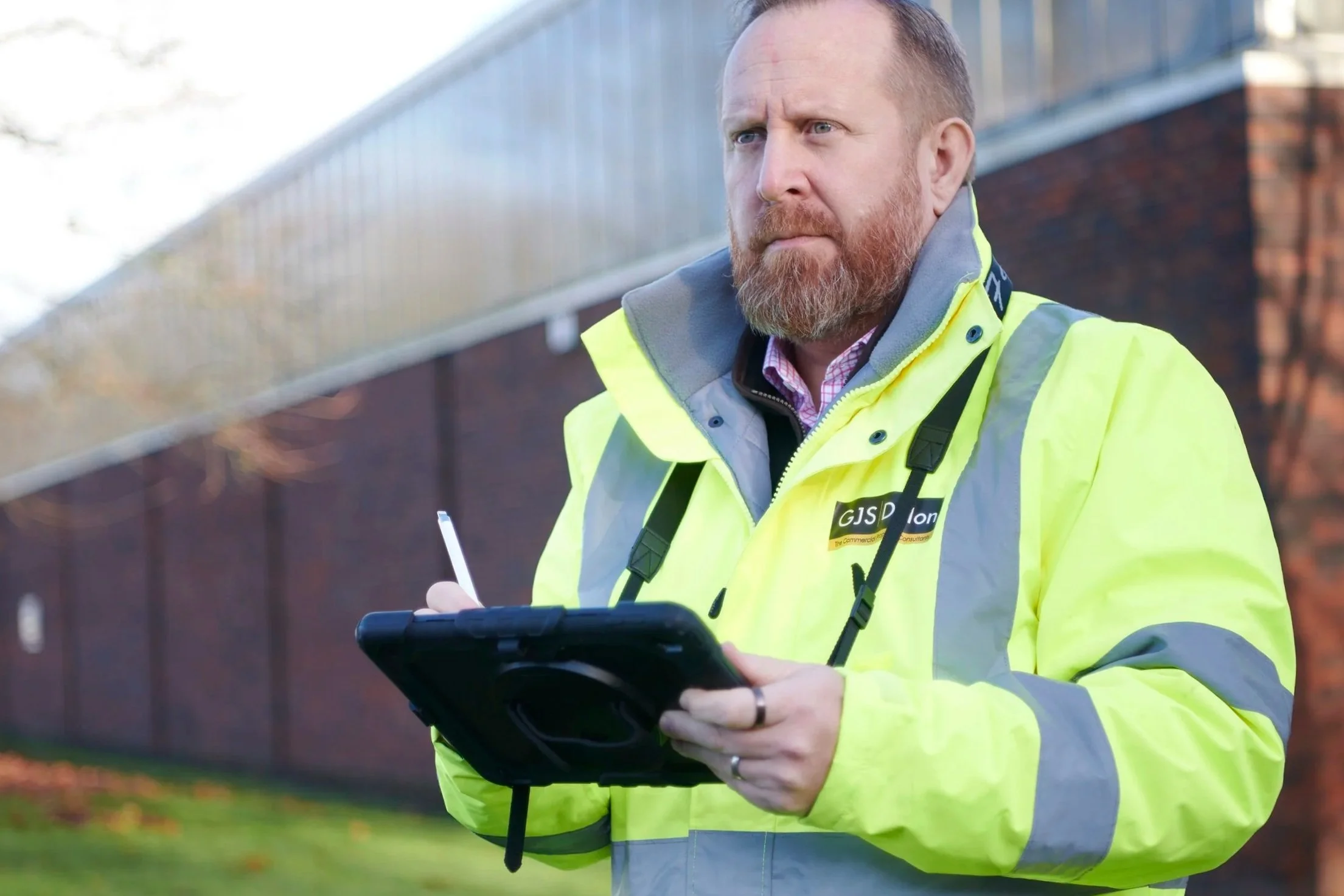
Experience that shows up before the problem does.
I've spent most of my career walking into buildings other people are about to buy, lease, sell, or hand back. By the time I'm called, the deal is usually already in motion. The question I'm there to answer is always some version of the same thing: what am I not seeing?
After enough years doing this, you start to notice a pattern. The buildings that cause the most expensive problems are rarely the ones that look obviously bad. They're the ones that look fine, right up until someone who knows where to look spends two hours walking the roof void, the plant room, and the perimeter.
That's really the case for instructing a surveyor in one sentence: it's not about distrust, it's about visibility. Most people involved in a commercial property transaction, landlords, tenants, investors, are highly competent at their own jobs. Reading a building's condition simply isn't one of them, and it isn't supposed to be.
Here's what that visibility actually buys you, at each stage where it matters.
Before you commit, not after
The most expensive mistakes I see aren't bad buildings. They're good buildings bought or leased without anyone checking first.
A roof nearing the end of its life, a heating system that's been patched rather than properly maintained, water ingress that's been painted over rather than fixed, none of these show up in a set of accounts or a glossy set of marketing photos. They show up when you climb up and look.
The value of a pre-acquisition or pre-lease survey isn't really the report itself. It's the negotiating position it gives you. I've sat across the table often enough to know that a well-evidenced survey finding changes a conversation entirely, from "take it or leave it" to "let's talk about the price, or who's fixing what." Clients who commission a survey before they sign tend to walk into a deal with their eyes open. Clients who don't, find out what they missed later, usually at a worse price than it would have cost to find out first.
The handover most landlords don't fight for
There's a particular kind of frustration in this job, watching a landlord accept a lease surrender or expiry with a quiet sigh, rather than a proper claim, simply because nobody made the case for what was actually owed.
Most commercial leases carry real repair and reinstatement obligations. Most tenants, left unchecked, don't meet them in full. The gap between "the building looks a bit tired" and a defensible, costed dilapidations claim is exactly where a surveyor earns their fee, often several times over. I've seen landlords recover sums that more than cover years of survey fees, simply because someone took the time to document the condition properly and hold the line on what the lease actually required.
This isn't about being adversarial with tenants. It's about both sides knowing, with evidence rather than opinion, what's actually owed.
Maintenance is a strategy, not an emergency
If there's one habit I'd want every landlord and asset manager to adopt, it's this: stop waiting for things to fail.
Reactive maintenance is always the most expensive kind. It happens at the worst possible time, costs more because there's no time to plan or tender properly, and almost always disrupts an occupier in the process. A planned preventative maintenance programme, built on a proper condition survey, turns a string of unpredictable emergencies into a known, budgeted forecast. You can plan capital expenditure years in advance instead of finding out about it the week the lift breaks down.
This is the part of the job that gets the least attention and probably deserves the most. The buildings I see ageing well, financially as well as physically, are almost always the ones being managed against a plan rather than a string of phone calls to contractors.
The compliance question that's catching people out
A few years ago, this section of the article wouldn't have existed. Today, it's one of the most common conversations I have.
Minimum Energy Efficiency Standards now mean a commercial building below a certain EPC rating generally can't be lawfully let. I've seen this stop sales at the eleventh hour, hold up lease renewals, and trip up financing conditions for landlords who simply hadn't checked their rating recently and assumed it wasn't their problem yet.
The fix, in most cases, is genuinely manageable, better controls, glazing, insulation, lighting upgrades. The expense only becomes serious when it's discovered at the worst possible moment in a transaction, rather than addressed calmly, on a timeline of your own choosing. This is exactly the kind of problem a surveyor exists to catch early, while there's still room to act on it.
The thread running through all of it
Every one of these situations has the same shape. There's a window where acting early gives you options, leverage, a recovered claim, a manageable budget, a solvable compliance gap, and a point after which those options narrow or disappear entirely.
A good surveyor's job isn't really to find problems. It's to find them while you still have a choice about what to do next.
If you're approaching any stage of a commercial property's lifecycle, buying it, leasing it, managing it, or handing it back, that's the moment to get someone in who's spent their career learning where to look.
We can help
If any of this resonates with something you're navigating right now, I'd be glad to talk it through, give me a call on 01905 676169 or email info@gjsdillon.co.uk.